


Dual Turret Slitter Rewinder
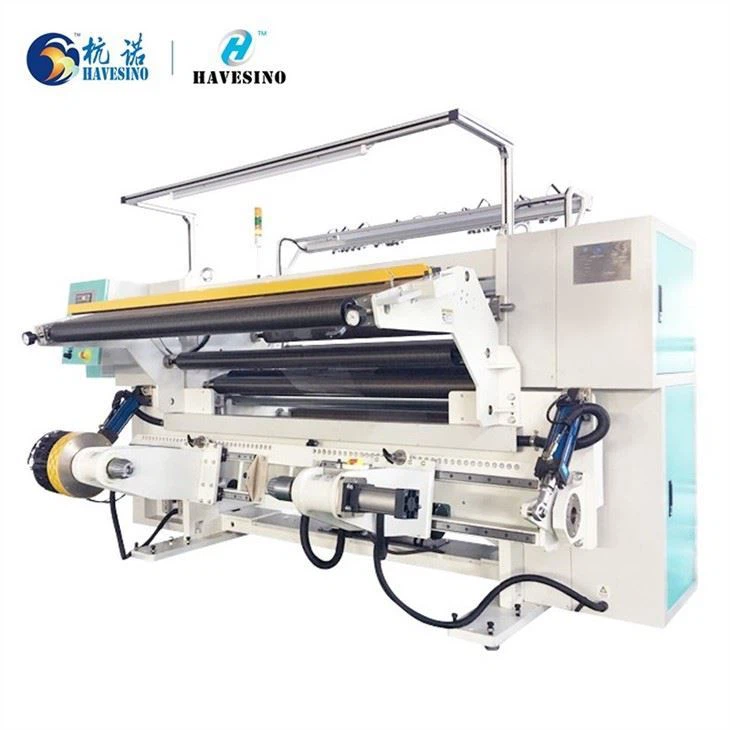
Highly efficient dual-turret slitter rewinders: HN1300T and HN1600T for fast cycle times and ease of operation
Our Dual Turret Slitter Rewinder HN1300T and HN1600T is suitable for film producers and flexible material converters, they are capable of processing a wide range of films, foils, papers and laminates.Dual Turret slitter rewinder increase productivity by reducing the downtime deficit slitter rewinders encounter when unloading a completed slitting job and preparing for the next slitting job.. Cycle times are more than five times faster than conventional slitter cycle times. The turret capability of the X6t perfectly compliments the other automation options – including laser core alignment, automatic shear and razor knife positioning, automatic core positioning, end of roll cut off and off-loading pushers with roll handling- to produce levels of efficiency and operator simplicity surpassing many competitive machines.
-
![Turret Rewinder For Sale]() Turret Rewinder For SaleThis machine is our own design and was built to slit Jumbo roll to small widths using the stacked shear slitting method.read more
Turret Rewinder For SaleThis machine is our own design and was built to slit Jumbo roll to small widths using the stacked shear slitting method.read more -
![Duplex Turret Slitter Rewinder HN1300T]() Duplex Turret Slitter Rewinder HN1300TREWINDING AND INSPECTING THE MATERIAL FROM 12-1500um PET,BOPP,CPP,LAMINATION MATERIAL OTHER PRINTED FILM AND FOIL.read more
Duplex Turret Slitter Rewinder HN1300TREWINDING AND INSPECTING THE MATERIAL FROM 12-1500um PET,BOPP,CPP,LAMINATION MATERIAL OTHER PRINTED FILM AND FOIL.read more


what is Dual Turret Slitter Rewinder
The Dual Turret Slitter Rewinder is a machine that slits and rewinds a roll of material to the required length, then stops, cuts and glues the ends of the material to their respective slit rolls. It also minimizes rewind changeover time by using two pairs of rewind shafts mounted on their own turrets.
the features of the Dual Turret Slitter Rewinder
- Integrated material handling equipment
- User interface
- Overhead path (OHP) layout
- Automatic cross-cutting of finished rolls
- Tension adjustment during rewinding
- Laser core positioning
- Servo positioning


Advantages of Dual Turret Slitter Rewinder
- Maximize production efficiency: Achieve continuous production flow by reducing downtime
- Suitable for a variety of order types: Meet both large-volume and variable short-distance running needs
- High-quality finished rolls: Advanced tension control and winding shaft technology ensure high standards for various applications
- Flexibility and versatility: Integrate a variety of slitting technologies to adapt to different materials and special requirements
- Standard Dual Turret Slitter Rewinders
- High-Speed Dual Turret Slitter Rewinders
- Precision Dual Turret Slitter Rewinders
- Convertible Dual Turret Slitter Rewinders
- Fully Automated Dual Turret Slitter Rewinders
- Customizable Dual Turret Slitter Rewinders
- Wide Web Dual Turret Slitter Rewinders
- Small Diameter Core Dual Turret Slitter Rewinders
- Servo-Driven Dual Turret Slitter Rewinders
- Environmental Dual Turret Slitter Rewinders

Application of Dual Turret Slitter Rewinder

Dual Turret Slitter Rewinders are versatile machines that find applications across various industries where materials need to be slit and rewind into smaller rolls. The primary applications include, but are not limited to, the following:
1. Flexible Packaging Industry: This industry extensively uses Dual Turret Slitter Rewinders for processing films and laminates used in food packaging, medical packaging, and other types of flexible packaging materials.
2. Label Industry: Machines are used to slit and rewind large rolls of label stock into smaller rolls that are more convenient for label printers and converters.
3. Tape Industry: For slitting and rewinding various types of tapes, including adhesive tapes, double-sided tapes, and specialty tapes.
4. Paper and Board Industry: Used for slitting and rewinding paper, board, and cardboard materials used in packaging, printing, and other applications.
5. Foils and Films Industry: Ideal for slitting and rewinding thin gauge materials such as aluminum foil, plastic films, and other similar materials.
6. Medical Industry: For precision slitting of materials used in medical applications, such as medical tapes, dressings, and disposable products.
7. Electronics Industry: Machines are used to slit and rewind materials like copper foils, Mylar, and other substrates used in electronic components.
8. Textile Industry: For slitting and rewinding materials like fabric, nonwoven fabrics, and other textiles used in apparel and home furnishings.
9. Security and Specialty Films: Used for slitting specialty films, such as those used for security applications, solar control, and other niche markets.
10. Printing Industry: For slitting and rewinding printed materials, including newspapers, magazines, and commercial prints, into manageable sizes for further processing or distribution.
What is the process of rewind slitting?
During the rewinding and slitting process, the web is first fed into the machine and gradually unrolled through a series of rollers. As the material unfolds, it passes through the cutting area of the machine, which is equipped with a knife or laser cutting system. Precise control of the knife or laser ensures that the material is cut exactly to the predetermined width. Once cut, the material is wound on one or more rewinding spools to form a narrower roll.
The key to this process is to keep the tension in the material stable and to ensure precise cutting. The tension control system adjusts the appropriate tension based on the type and thickness of the material to avoid excessive stretch or slack, which can cause wrinkles or deformation in the finished roll. At the same time, precise cutting is crucial to ensure the quality of the final product, especially in industries that require high-precision slitting, such as the electronics and medical industries.
When the diameter of the web is significantly larger than its width, the multiple narrower strips of material after slitting may take on a special shape. These strips are often referred to as "strips" or "pancakes." This situation often occurs when wide-width materials are cut into multiple narrow-width rolls, and the diameter of each narrow-width roll is particularly large compared to its width. These "pancake" rolls may be further processed during subsequent processing, such as printing, lamination, or other forms of conversion, and ultimately used in various end applications.

do you have any question?
What does a slitter machine do?
To put things simply, the main role of a slitting machine is to convert (slit) papers, film and foil materials so that large rolls of these materials can be cut into narrower rolls. A slitting machine consists of three main parts; the unwind, the slitter and the rewind.
What is the slitting process?
Steel slitting is a steel manufacturing process wherein a coil of steel is slit into the lengths and widths specified by the end application. This process requires machinery lines equipped with a decoiler, slitter, and a recoiler — to achieve the end product: slit steel coils, or “mults.”
What is the purpose of slitting?
Slitting is a process in which a roll of material is cut into narrower rolls or strips. The potential workpieces are noticeably thin measuring only at 0.001 up to 0.215 inch. These can also be machined in the form of sheets or rolls. It is often used in the manufacturing of paper, metal, plastic, and textile products.
Why is slitting necessary?
Cost Savings: Slitting is far faster and cheaper per pound versus cutting sheets or alternate saw methods requiring extensive labor, time, and blade costs. Customization: Precision rotary slitters produce coils in specialized widths tailored to customers' roll forming and component size needs.
All dual turret slitter rewinder products come in high precision and good performance. Feel free to buy dual turret slitter rewinder or place customized orders from professional manufacturers and suppliers in China. Contact our factory for more info now.