


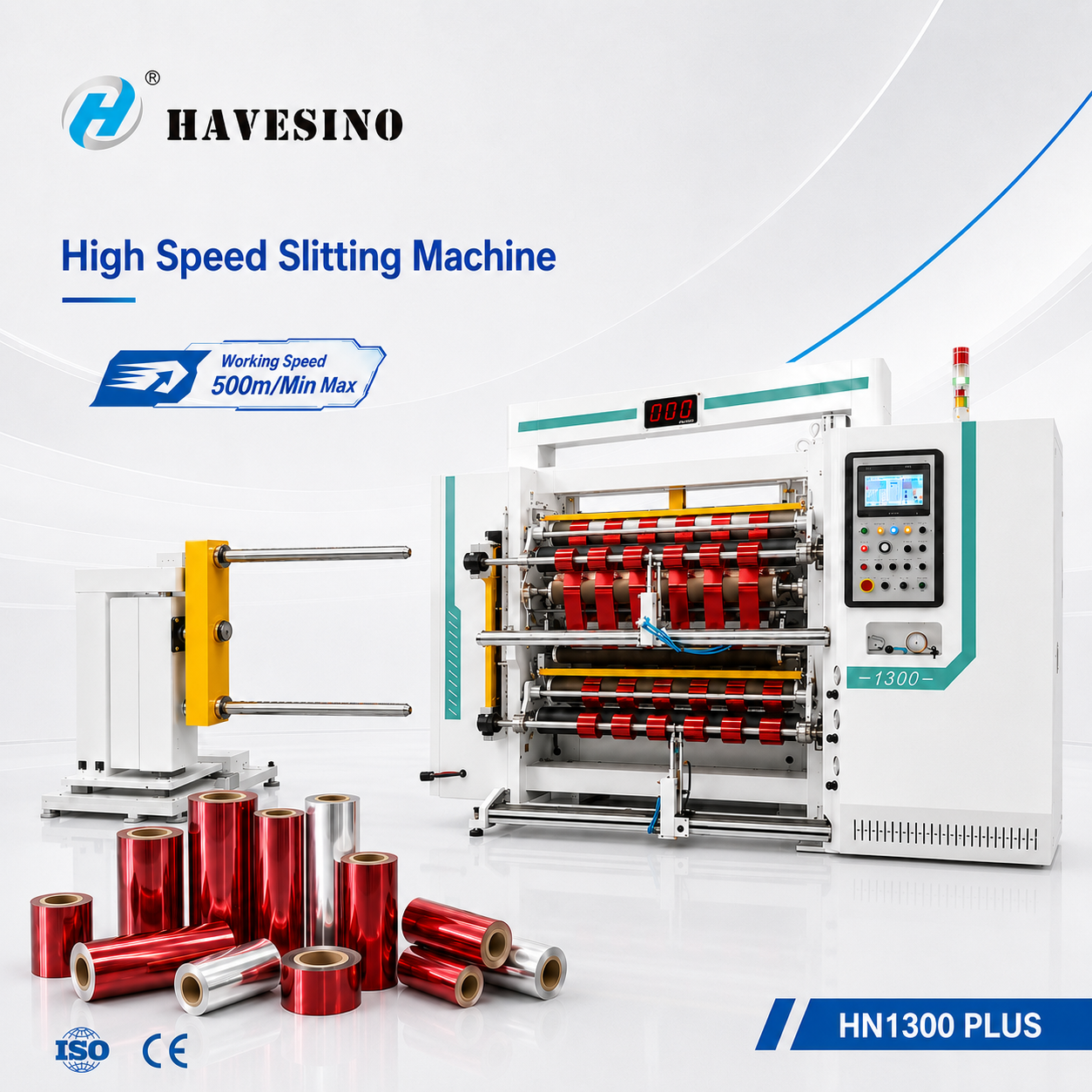
 Tension control in film slitting is one of the main factors that determines whether a slitter rewinder can produce clean edges, flat webs and consistent finished rolls. Flexible films can stretch, shrink, wrinkle or move sideways when the web tension is unstable. Even when the knives are correctly selected and aligned, poor tension control can still lead to telescoping rolls, loose winding, excessive roll hardness or uneven roll appearance.
For converters handling BOPP, PET, PE, laminated film and other flexible packaging materials, tension must be managed throughout unwinding, slitting and rewinding. The correct setting is not simply a fixed number. It depends on the material, thickness, roll diameter, finished roll specification and production target.
What Is Tension Control in Film Slitting and Rewinding?
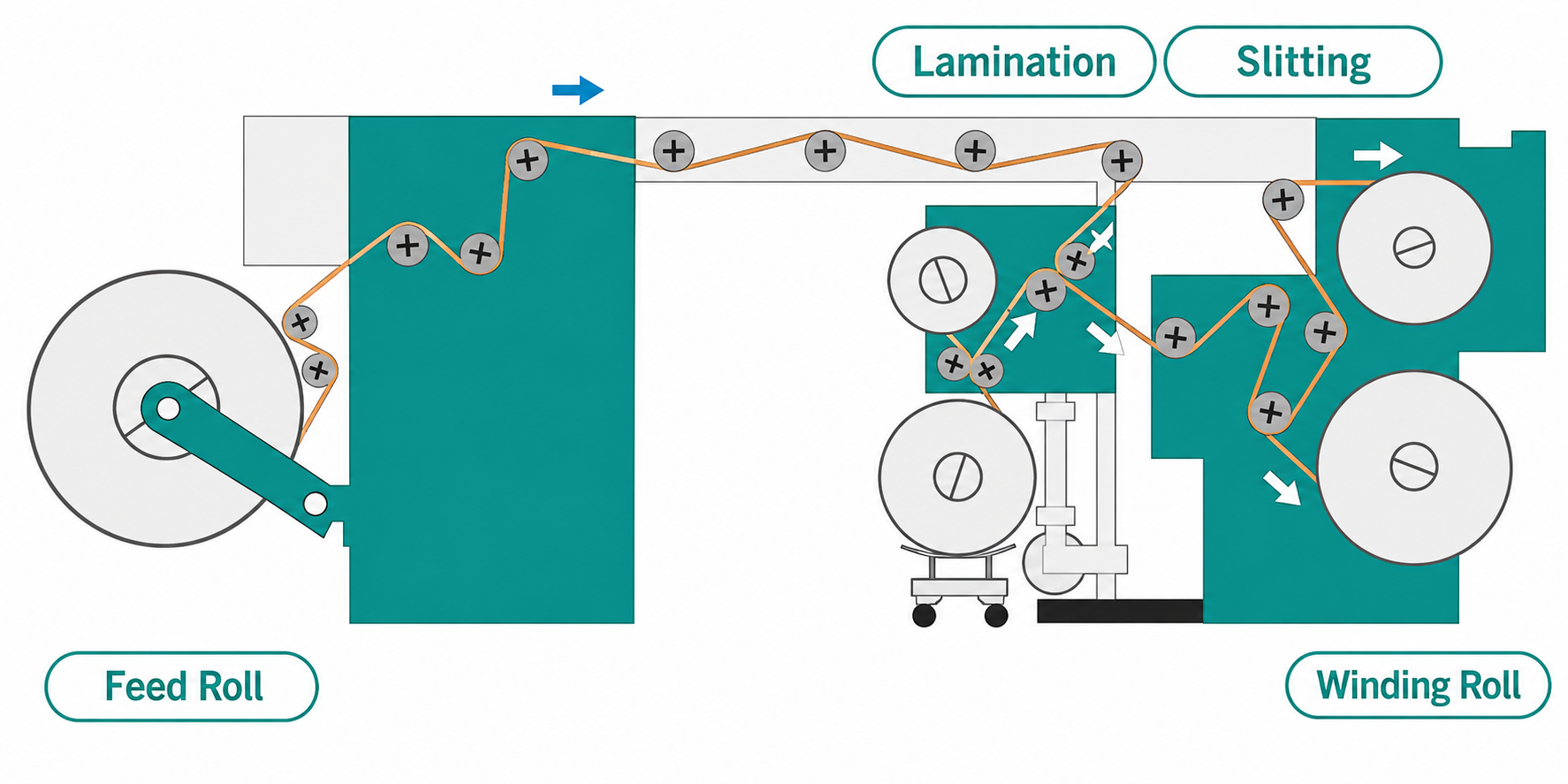
Tension control is the process of keeping the moving web under a suitable and stable pulling force as it passes through the machine. In a film slitting and rewinding line, the web leaves the mother roll, travels through guide rollers and the slitting section, and is then rewound into narrower rolls.
As the mother roll becomes smaller and the finished rolls become larger, the rotating diameter and torque requirements change continuously. A practical tension control system must respond to these changes while maintaining stable web movement. Depending on the machine configuration, this may involve coordinated control of the unwind brake or drive, tension sensors, control algorithms and rewinding motors.
Why Stable Tension Control Matters in Film Slitting
Stable tension control affects both the slitting process and the final roll. When tension is too low, the web may wander, wrinkle or lose contact with guide rollers. When tension is too high, thin film may stretch or deform, and the rewound roll may become excessively hard.
The most important benefits are practical: more stable web tracking, cleaner slitting conditions, smoother rewinding and more consistent rolls from the core to the outer diameter. These factors also reduce the time operators spend correcting roll shape or adjusting settings during production.
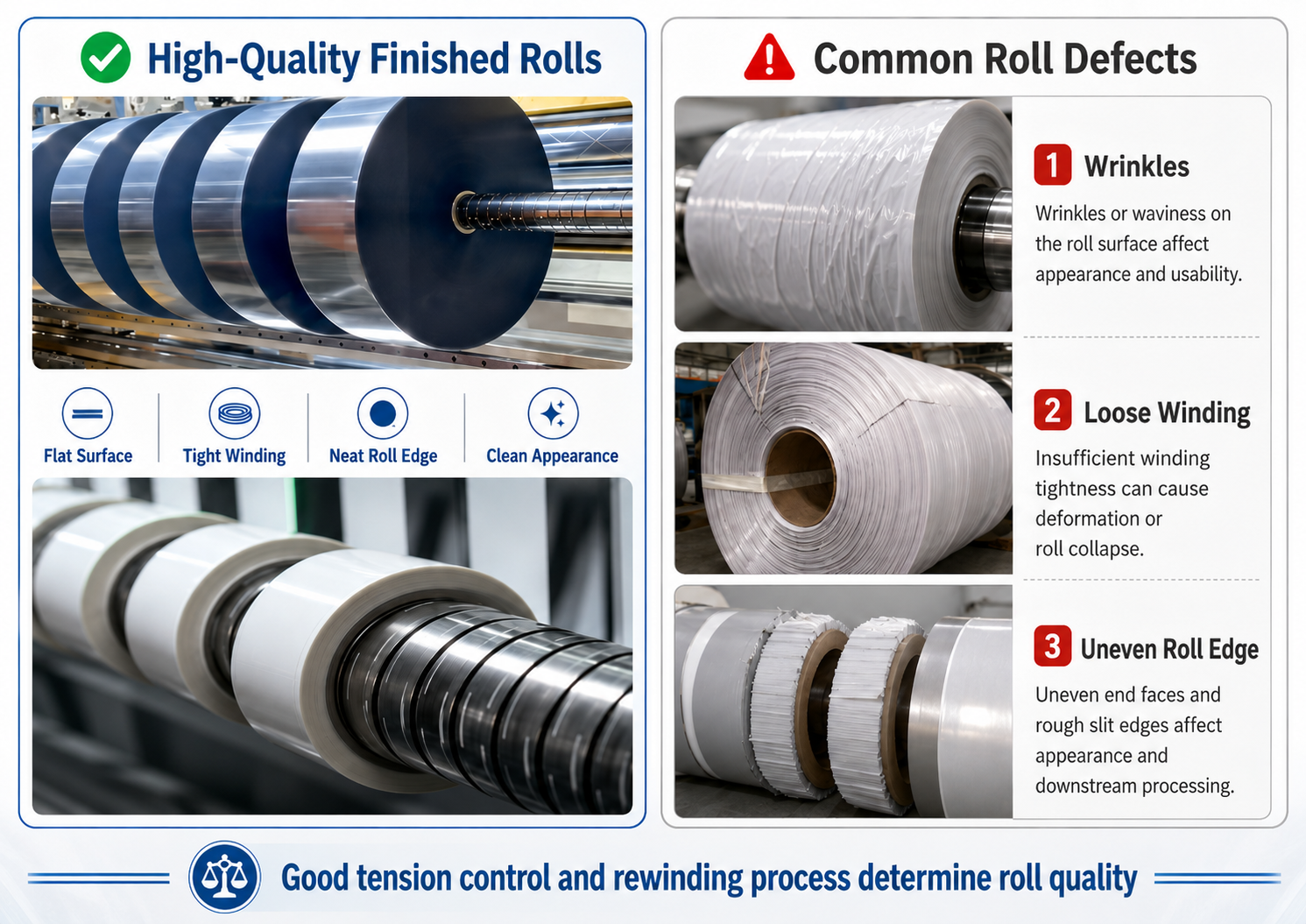
How Tension Problems Affect Finished Roll Quality
|
Tension Condition |
Possible Result |
Practical Check |
|
Tension too low |
Wrinkles, loose rolls, web wandering or poor edge alignment |
Check unwind stability, web path and rewinding torque |
|
Tension too high |
Film stretch, deformation, hard rolls or possible web breaks |
Review material sensitivity and reduce unnecessary pulling force |
|
Tension fluctuates |
Uneven roll hardness, telescoping or inconsistent roll appearance |
Check sensors, drives, roller condition and control response |
|
Poor tension taper |
Outer layers become too tight as roll diameter increases |
Adjust winding profile according to roll build and material |
Key Machine Sections That Influence Tension Stability
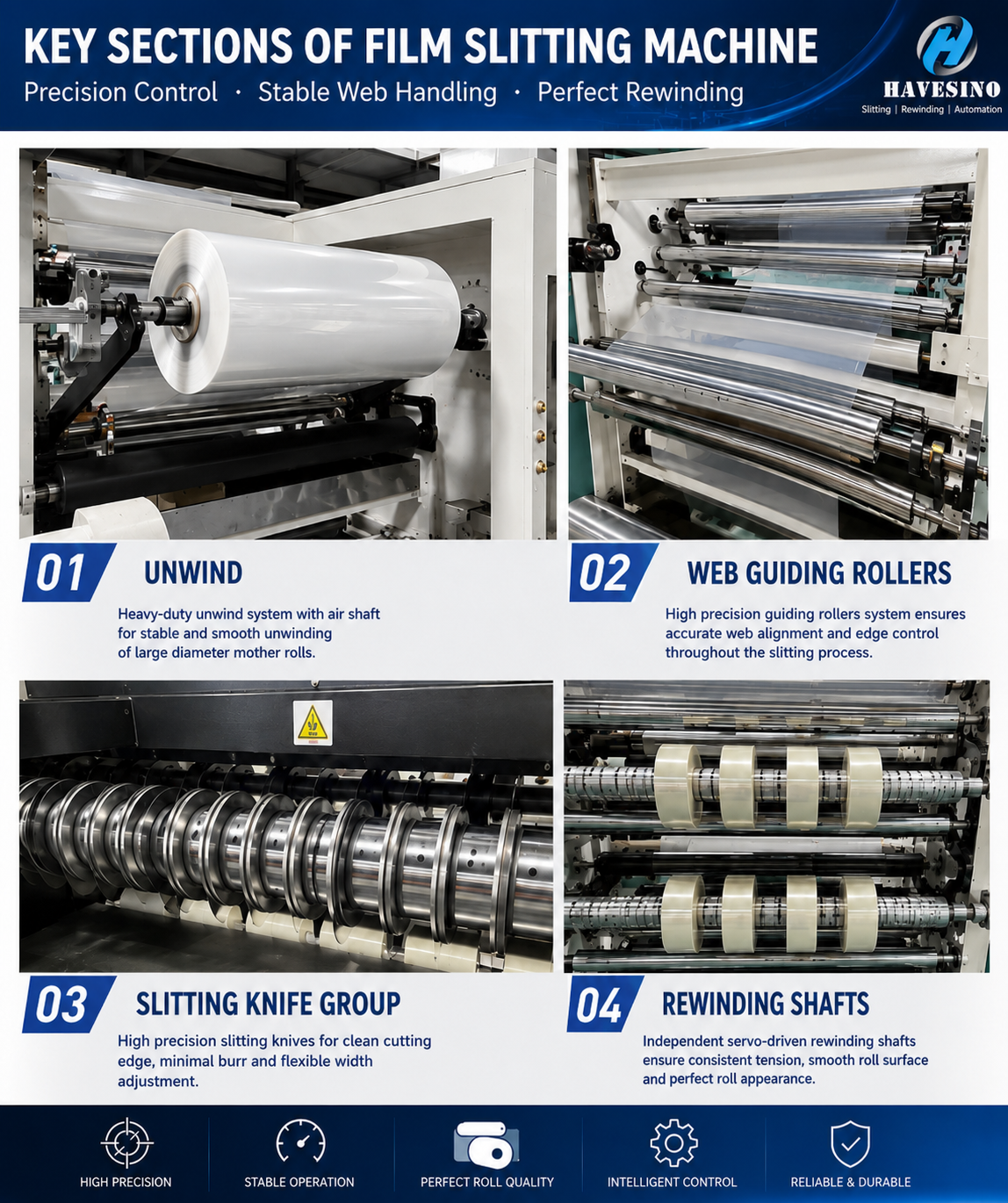
Unwinding section
The unwind section must release the mother roll smoothly as its diameter decreases. Unstable braking, poor roll alignment or mechanical vibration can introduce tension variation before the web reaches the knives.
Web guiding and roller path
Guide rollers should support stable web travel without unnecessary resistance. Roller condition, alignment, surface cleanliness and wrap angle can all influence tension and tracking.
Slitting section
The cutting method and knife condition must match the film. However, clean slitting also depends on a stable web. If the web vibrates or shifts laterally, edge quality and slit-width consistency may suffer.
Rewinding section
The rewinding shafts must build finished rolls with controlled torque and pressure. The machine should manage the changing roll diameter so that the roll remains smooth and stable throughout the winding cycle.
How to Choose a Film Slitting Machine with Reliable Tension Control
Buyers should evaluate tension control as part of the complete machine system rather than as a single component. A high-quality sensor alone cannot compensate for an unsuitable web path, poorly coordinated drives or an incorrect winding structure.
Material type and whether it stretches easily
Mother roll width, diameter and weight
Material thickness and thickness variation
Required finished roll width and diameter
Number of slit rolls and rewinding arrangement
Expected roll hardness and edge appearance
Production speed target and frequency of material changes
Operator experience and recipe management needs
A detailed buyer should also review how to choose a film slitting machine based on actual material and finished roll requirements, rather than selecting a machine only by headline speed.
Recommended HAVESINO Solution
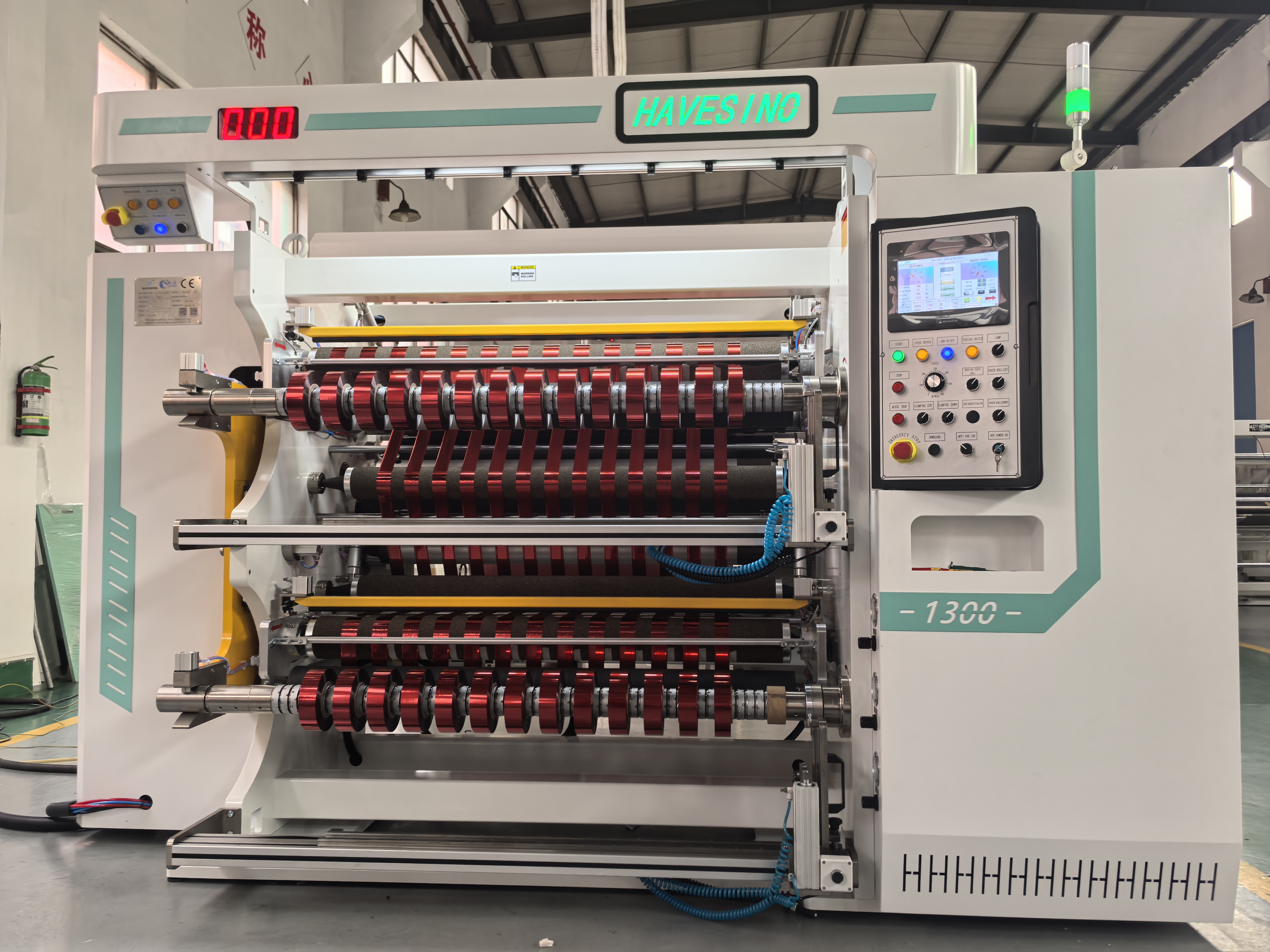
HAVESINO Group focuses on slitting and rewinding solutions for flexible packaging and other roll materials. For film converting applications, models can be selected according to material type, mother roll size, finished roll requirements and production needs.
A flexible packaging slitter rewinder should combine stable unwinding, suitable web guiding, clean slitting and coordinated rewinding control. For relevant flexible packaging applications, the HN1300 PLUS can be considered depending on the final configuration and actual production requirements.
Before machine selection, buyers should provide sample material information and explain any current production problems, such as wrinkles, telescoping, loose rolls, hard rolls or unstable edges. This allows the machine structure and control approach to be discussed around the real application.
Common Tension Control Mistakes
Using one tension setting for every material
Different films respond differently to pulling force. A setting suitable for one structure may be unsuitable for another.
Focusing only on maximum speed
Higher speed increases the need for coordinated control. Stable production quality is more important than a speed figure that cannot be maintained with the actual material.
Ignoring roll diameter changes
Both unwind and rewind conditions change as roll diameters change. The control system should respond throughout the complete cycle.
Overlooking mechanical conditions
Worn rollers, poor alignment, contamination and vibration can create symptoms that appear to be control problems.
FAQ
What is the purpose of tension control in a film slitter rewinder?
Its purpose is to keep the film web moving with a suitable and stable pulling force during unwinding, slitting and rewinding. This supports clean web handling and consistent finished roll quality.
What happens when film winding tension is too high?
Excessive tension may stretch or deform sensitive film, increase roll hardness and raise the risk of web breaks or dimensional change.
Can low tension cause wrinkles?
Yes. Tension that is too low or unstable can allow the web to become loose, wander or wrinkle, especially when the material is thin or the web path is not well controlled.
Is one tension setting suitable for BOPP, PET and PE film?
Not usually. Each material structure has different stiffness, stretch behavior, thickness and surface characteristics. Settings should be adjusted according to the actual film and roll specification.
Is higher slitting speed always better?
No. Speed should be evaluated together with tension stability, slitting quality, rewinding performance and operator control. A stable production speed is more valuable than an unstable maximum speed.
What information should buyers provide before selecting a slitter rewinder?
Provide the material type, thickness, mother roll width and diameter, finished roll width and diameter, core size, production target and any current roll-quality problems.
Conclusion
Tension control in film slitting is essential because it connects every stage of the process. Stable control helps the web travel smoothly, supports clean slitting and allows the rewinding section to build consistent finished rolls. The best solution should be selected according to the material, roll dimensions, winding structure and production target.
Share your material type, roll size and production target with Contact HAVESINO to discuss a suitable slitter rewinder configuration.